Overlooking Nazareth
Mount of Beatitudes

On the way to Nablus

Shepherd near Al Fara'a
Young boys near Zababdeh
Mar Saba Monastery
Walking through Wadi Auja"One’s destination is never a place, but a new way of seeing things." Henry Miller
We made our final push to Bethlehem, an arduous 13 km trek uphill, from the Mar Saba Monastery. Perched on the side of a cliff in the Judean desert, the monastery was founded in 439 and is one of the oldest inhabited monasteries in the world.
Each day presented its own set of challenges. After the first day, in which we covered 20 km and walked up and down three large hills, I wondered how my feet were going to carry me the rest of the way. The third day to Nablus was especially taxing, as we slogged up a mountain in the searing heat. Our overnight stay in an impoverished village, near Auja, was challenging for a host of reasons. The basic house we stayed in was made of mud brick, and the only electricity powered four small light bulbs throughout the home. The toilet had a crack in it, so when you flushed it, water shot out the side, and when I pulled the cover in my small bed over me, I couldn’t help but wonder when it was last washed. The screens on the windows had long since been torn away. This meant an army of mosquitoes feasted on us all night long. I figured that I may have needed a blood transfusion, considering the amount of blood that was drained from my body. At one point, I put my jacket over my head to shield me from the unrelenting barrage. None of us got much sleep. Morning came as a relief.
But for every challenge, there was a corresponding reward. Seeing a country on foot, as few people have, was a one-of-a-kind experience. The Palestinian countryside is rich in beauty. From thriving farmland and bucolic hills in the north, to the stark beauty of the desert in the south, there were lots of Wow! moments. Like walking through Wadi Auja, where the canyon walls towered hundreds of feet above. We navigated around large boulders on the valley floor, and then found ourselves walking along a path that was only a foot or so wide, along the top of the gorge, which required a focussed mind so as not to slip. And just when fatigue and the warm afternoon sun were wearing us down, we stumbled upon a spring that was gushing clear, cool water from the ground. There was also the trek through Wadi Qelt, a Grand Canyon like scene that led to the St. George Monastery. It was here in the peaceful surroundings of the monastery that we waited for the rain to let up. And then a short time ago, I watched a full moon set over the Church of the Nativity in Bethlehem’s Manger Square.
If the landscape is beautiful, then so too are the people. Despite the challenges that Palestinians face, and they are many, we were welcomed with bright smiles and big hellos, wherever we went.
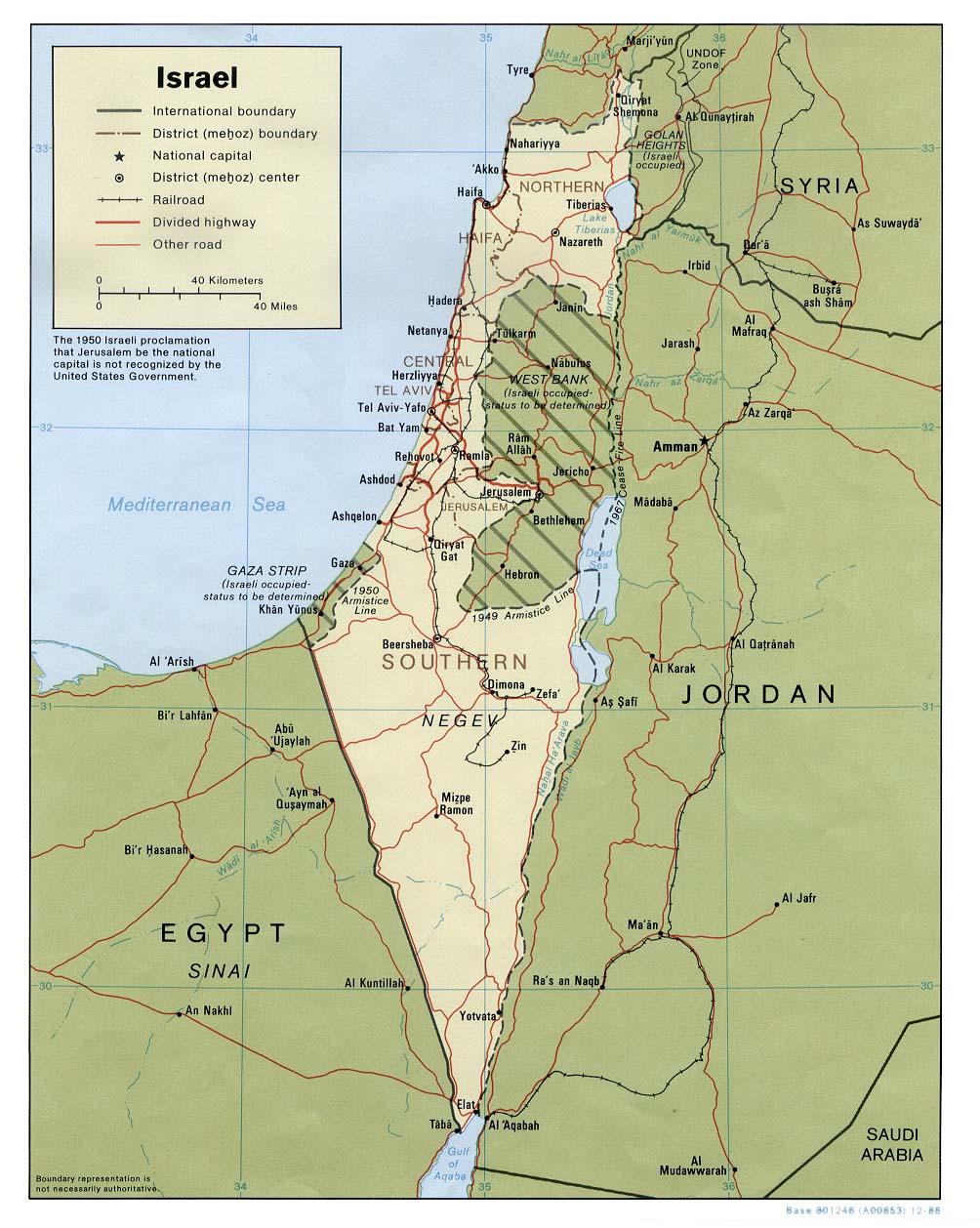
Look at a map and you’ll see that the most direct route from Nazareth to Bethlehem is about 90 km straight south, but some believe that Mary and Joseph would likely have gone east to the Jordan Valley, before travelling south. This route would have been less mountainous and safer, as it would bypass Samaria, which was often at odds with the Jews. After reaching the ancient town of Jericho, whose history dates back 10,000 years, they would have turned west for the last stretch to Bethlehem.
We learned that a group of Belgians would be joining us for the first three days, so after a bit of a disorganized start, our guide, Nadal, led the 14 of us into a farmer’s field for the start of our eight day journey to Bethlehem. We walked past fields brimming with onions, through groves of olive trees, and up hillsides blanketed with wild flowers. We crossed paths with two shepherds and their herd of sheep.
While our walk to Bethlehem isn't following the exact route that Mary and Joseph would have travelled, I still felt as if I were following in their footsteps; minus the donkey, of course.
We stopped for lunch under a stand of trees on a hillock near the village of Al Mughayer. Not long after arriving, a taxi arrived with the ingredients for our meal-- bread, humus, some sliced meat, pickles, and a white cheese-like substance that is squeezed out of bag into a coil. Fine the first few times, but it would get a little tired after a few days of eating the same for breakfast, lunch and dinner.
Over lunch, Nadal pointed in an easterly direction and told us that Israel’s security barrier was not far away.
“Maybe we should go there for an adventure,” someone in our group jokingly said.
“There is no adventure in Palestine,” Nadal responded curtly.
It was a sharp reminder that the conditions in Palestine aren’t simply some sideshow to be gawked at. The conflict between Israel and the Palestinians has raged on for more than 60 years, and has exacted a terrible toll on both sides, but more so for the Palestinians.
With our bellies full, we found a path that cut through a valley. Passing one village perched high on a hill, a large group of young boys saw us. “Hello…hello…welcome…welcome,” we could hear them call out, as they clamored down the steep hillside to greet us. We exchanged greetings, shook hands, and posed for pictures. When we moved on our group swelled, as the boys ran after us for another kilometer or two. We left one path for another and waved goodbye to the boys. They waved back and ran back to their village.
After climbing one more hill, we descended through a grove of olive trees, some of which were more than a 1,000 years old.
“This all looks very biblical,” John said, taking in the scene that unfolded before us. “Well, of course it is.”
Almost 20 kilometres after setting our in the morning, we entered the town of Zababdeh, a predominantly Christian town, where by law the mayor must be a Christian. Someone commented that they thought we were the military. What a rag tag militia that would have been. They probably thought that because Ronald was wearing his camouflage pants, and walking out in front, as he always does.
John and I had a discussion, well actually I forced him into the discussion by suggesting that it seemed a little exclusive that the mayor had to be of a specific religious persuasion. Couldn’t an Atheist or Muslim, or Buddhist do just as good a job as a Christian?
“Most of the people in the village are Christian, so they would want to vote one of their own in,” John offered.
Still, I was bemused that religion need be a requirement for the mayor’s job. That’s when John said, “In this part of the world, you have three choices [Christianity, Judaism, and Islam], pick one.”
The first thing I noticed after crossing the border into northern Palestine was the quality of the roads. In contrast to the roads in Israel that were smooth and well paved, here they were rough and dotted with potholes. Though, in many areas the U.S. government is funding a lot of new road construction.
Loud Arabic music filled the car, as we debated whether to go first into Jenin, or to our hotel. “Hotel or Jenin...hotel or Jenin,” our driver barked, as we neared a turnoff.
“Okay, to the hotel,” the three of us answered in unison.
Surrounded by rich, fertile fields, the Haddad Hotel is located two miles from Jenin. The city made headlines in 2002, when it was the scene of fierce fighting between Palestinians and the Israeli military, in which 75 were killed.
From the road, the first thing that greets visitors is a small amusement park, but after driving up a long driveway, the extent to the Haddad family’s ambitions and garish taste reveals itself. Sure there is a small, modern hotel, but so too is there a theatre, with a capacity for 2,000 people, and a stage set that Caesar would be proud of with its faux gold coloured Roman columns.
Next to the hotel are three mansions, whose architecture could only be described as southern U.S. antebellum meets Rome. One house is the father's, and the others for his two sons. The middle house has a large relief and statue of St. George slaying a dragon. Scattered haphazardly through the grounds are Roman columns and life-sized statues of gold lions. In fact, the only danger I have experienced so far on this trip is the chance of being knocked over by a Roman column. The family is also putting the finishing touches on a museum highlighting Palestinian history.
One of the sons showed us around the amusement park, which features 16 rides. All of the rides were built in the family owned factory, which gives the park a bit of a dated, worn-around-the edges feel to it. Maybe the kind of midway my parents may have experienced in the 1950s or ‘60s. The family goes online to see what the latest rides are out there, and then designs similar ones for the Park. The family is looking at expanding the amusement park, which was filled mostly with young children and their mothers.
Walking around one couldn’t help see the irony between this place and the Jenin refugee camp, which we had driven through earlier in the day. John thought the entire place was tasteless, especially given the conditions that many people in the area live. I reminded him that the hotel and amusement park, along with the other attractions employed lots of people desperate for jobs. In fact, the factory that builds the rides employs 70 people alone. He agreed, but still shook his head. We watched one ride come to a stop. A woman vomited. We all turned and walked away.
That night for dinner, our guide arranged for us to eat outside amidst the trees and Roman columns. While the days were warm and sunny, the evenings were cool. John was wearing a sweater and jacket, and both Ronald and I went inside to retrieve our own jackets and sweaters. Back outside, each of us, including our guide, Nad, had our arms crossed trying to stay warm.
“This is absurd...it this what Palestinians do,” John asked Nad, in a half-joking, half-serious manner.
We all laughed at this subtle suggestion to move inside, where a others were enjoying dinner, without having to wear a sweater and jacket.
With St. George slaying a dragon nearby, we continued to chuckle about the absurdity of sitting outside in the cold, while deriding the over-the-top atmosphere. If you find yourself in Jenin, the Haddad Hotel might just be your best bet, especially if you like a kitschy ambience.
Note: Long days have meant little time for writing, so I'm a little behind in my posts. Have completed three days walking--about 54 km. Leaving Nablus this morning and heading for Duma. May not have internet access until Jericho in a few days. Also haven't yet been able to find a way to upload any photos.
The effects of jet lag forced me awake earlier than I would have liked, but in doing so I was treated to a magical scene as the morning sun peeked above the hills surrounding Nazareth, bathing the town in a warm glow. Our hotel, St. Margaret’s Pilgrims Hostel, sits atop one of these hills, offering sweeping views of the town and surrounding countryside. Each morning I was awoken by the wonderful sounds of roosters and church bells. The centre of the town is dominated by the Church of the Annunciation, which as the story goes is the place where the Angel Gabriel came to Mary and told her that she would bear a son.
Over breakfast, we met the third person in our group (though we would learn later that 11 Belgians would be joining us for the first three days). Ronald was a young guy from The Netherlands, who wasn’t shy about advertising his politics. One day he wore a black t-shirt with a red image of a Nike symbol that had been turned into the old Soviet Hammer and Sickle image, with the words, Strike – Just Do It, emblazoned on the front. He has been to Palestine twice before, supporting local farmers by picking olives. He has an unabashed passion for the Palestinian cause, but has a habit of using the pronoun “We”, when discussing these issues, even though he isn’t part of the “We”. In talking about the Wall that the Israelis have built to separate the Palestinian West Bank from Israel (though in many cases the Wall, or Security Barrier, as the Israelis call it, actually separates Palestinians from Palestinians, but more on that later), Ronald quickly shot back: “We call it the Apartheid Wall”. Sometimes he talks as if he is Palestinian himself. Maybe when one is so passionate about a cause they assume the identity of that group. It’s still annoying, nonetheless.
The other member of our group, who I have referred in previous posts, is Dr. John Soos (yes, his name is pronounced the same as the famed author Dr. Seuss, though we haven’t had any green eggs and ham). John is spirited, easily excitable, and has become the source of much comic relief. On more than occassion he has exclaimed, "I can't believe I'm here!"
As a transplant psychologist for the past 20 years, I knew John as a colleague. We would often swap stories about our travels, and several months ago he asked if I had any trips planned. I told him about this adventure. Thirty minutes later he returned to my office and exclaimed, “I’ll go with you!”
The three of us were sitting in the back seat of a car that was winding its way up Mt. Tabor. John was educating us about the significance of the mountain in Christianity. Something about a mystical experience and Jesus talking to Moses and Elijah, and a foretelling of his death and resurrection.
I asked Ronald about his religious beliefs.
“Yes, I’m Catholic.”
“Then, we’re kind of like a sandwich,” I said, sitting between two Catholics. “You guys are the bread, and I’m the ...” I was trying to think of a good metaphor, when John quickly said, “And you’re the spam.”
After descending Tabor, we drove about 15 minutes through the fertile Jezreel valley to the Israeli military checkpoint on the Palestinian border, not far from the city of Jenin.
We were not able to cross by car, so our driver and guide left us, and we crossed on foot. We weren’t sure if anyone would meet us on the other side.
We walked through a narrow maze-like passage way that was hemmed in by a high chain link fence. Not far away was a watchtower. It felt much like I imagine a prison might. Inside the heavily fortified building were 16 customs booths. It wasn’t busy, so just one booth was open. The woman took our passports and told us to wait. Two security guards took our passports away. We watched as Palestinians were forced to show an identity card and put their hands on a fingerprint reader before being allowed into their country. For me, the poignant moment came when I saw an elderly Arab man shuffle up to the checkpoint. Years before Israel even became a state in 1948, this man probably lived on the same land, where he now had to be fingerprinted each time he came and went.
I didn’t see them when we first entered, but up above on a cat walk were two Israeli security personnel. They walked around slowly, all the time with one finger on the trigger of a very large gun. Every time I looked up at them, they would lock eyes. It was very unnerving. Then, 30 minutes after arriving at the checkpoint, our passports were returned and the security officer told us to enjoy our trip.
After negotiating a series of security gates, we were in Palestine. No one was waiting for us, but we knew the name of the hotel we were staying at, so we jumped into a taxi, and sped off.
The land around us was hundreds of feet below sea level. The green hills, pitted with rock and stones, rolled down toward the Sea of Galilee. We found an unmarked path and began the steep climb. Waist high grass on both sides of the dirt trail whipped back and forth in the stiff wind. The top of the hill lay hidden, like a mystery waiting to be revealed.
We pushed ourselves higher and were rewarded with a sight that some believe could only have come from the divine. As we crested the hill, the land became flatter and the wide swath of cut grass in front of us formed a maze-like pattern that led to the Church of the Beatitudes. This Roman Catholic Church is believed to be built on the site where Jesus gave his Sermon on the Mont, a compilation of moral sayings. Best known of the Sermon are the eight Beatitudes (Matthew: 3-10)
Blessed are the poor in spirit,
for theirs is the kingdom of heaven.
Blessed are they who mourn,
for they shall be comforted.
Blessed are the meek,
for they shall inherit the earth.
Blessed are they who hunger and thirst for righteousness,
for they shall be satisfied.
Blessed are the merciful,
for they shall obtain mercy.
Blessed are the pure of heart,
for they shall see God.
Blessed are the peacemakers,
for they shall be called children of God.
Blessed are they who are persecuted for the sake of righteousness,
for theirs is the kingdom of heaven
Built in 1938, the Church of the Beatitudes is octagonal in shape, reflecting the eight Beatitudes. Around the Church, palms, and hibiscus, and tall slender cypress trees added to the sweeping views across the Galilee.
Earlier in the day, while waiting for a bus in Nazareth, a taxi driver, named Riad, persuaded us to empty our pockets of 170 shekels, about $50, to drive us the 45 minutes to Capernaum, a few kilometres up the road from the place where Jesus gave his sermon. Riad had said he would drive us back to Nazareth, but we didn’t want to be at the mercy of a pesky cab driver, so we said we would find our own way back.
So, after visiting the Church, and with little idea how we would get back to Nazareth, we descended the grassy hill, and wandered along the side of the road hoping to find a taxi. But there were none; only speeding cars and tour buses.
We walked on a little further and thinking that we would never get a taxi, I asked John if he would pray for a taxi. I figured since he would always do the sign of the cross each time we went into a church, and inside he would often pray or meditate, I thought he may have a connection to God, who would be able to call a cab for us.
“You pray for a cab,” he shot back
“But I wouldn’t know what to do or where to start,”
So, none of us prayed. Instead, we walked on. In the distance, a threatening storm cloud grew larger. I made half-hearted attempts to try and flag down passing cars and trucks. But none stopped. Hadn’t they heard of the Good Samaritan story, I thought as they all zoomed past? We finally made it to a busy road, and found a bus stop. We waited for some time until a taxi stopped with another passenger and asked if we wanted a ride. We climbed in and raced toward Tiberias.
With apologies to Jesus, I think that given our experience trying to get back to Nazareth, and to make the Beatitudes a little more relevant to our time, a ninth Beatitude should be added. And to make the process a little easier, I’ll propose some draft text:
Blessed are those that can find a taxi
for they won’t have to stand on the side of the road wondering if they’ll get home before nightfall
From the window of the airplane, I saw the placid waters of the Mediteranean sweeping onto sandy beaches. This was the ancient land of Israel. Below me was Tel Aviv--a compact and tidy looking city, whose buildings all wore a creamy white colour. A lively freeway snaked around a stand of modern office buildings. The land around the city was as flat as a dinner table, and nourished by the winter rains the fields had turned a rich, vibrant green, like the outside of a watermelon.
From above, this peaceful scene belied the fact that for thousands of years this little sliver of land with few natural resources had been conquered and reconquered and conquered again. The pattern repeating itself through the Centuries.
I walked to the customs hall prepared to be greeted by a steely-eyed young soldier, with aviator sun glasses and an automatic weapon slung over his shoulder. Instead, sitting behind the plexi-glass partition was an attractive young woman, with long, curly dark hair. She wore fashionable glasses, and guessed her to be in her 20s.
“Shalom, or good day,” I said to her.
“What is the purpose of your trip,” she asked, officiously.
“For a holiday”
“Where are you going? Where are you staying? Who are you travelling with?”
The inside of my mouth went dry as she peppered me with questions.
I told her I was going to Nazareth. And when she asked what I was going to do then. I told her I was going to walk to Bethlehem, and spend Easter weekend in Jerusalem.
“Are you travelling by yourself?”
I told her I was meeting a friend from Canada in a couple of hour’s time.
The questions kept coming. “Who are the people that arranged this trip? How do you know them? Have you met them before? Have you been to Israel before? Are the people that arranged this, a travel group?
I anticipated such questions, but still wondered about the consequence of my answers. I purposely didn’t make any reference to Palestine, and left such books, as Rene Backman’s A Wall in Palestine, for fear my bags would be searched provoking an unfavourable reaction.
Then she flipped through my passport examining the pages of stamps. For some reason she stopped at the page containing the Macedonian and Indonesian visas. She consulted her colleague beside her. Then another woman entered the booth and started asking me the same questions.
Hoping they would take pity on me, I told them I had been planning this trip for more than a year. Then they asked me if my visit to Jerusalem on Easter weekend was for Christian or Jewish. I tell them Christian. Isn’t that what Easter is all about, I think to myself. Maybe they just assumed, but I’m relieved they didn’t ask me if I was a Christian. It might have complicated things.
I had been there for only about 10 minutes, but it felt much longer. Then she stamped my passport and told me to enjoy the trip.
Walking into the arrivals area reminded me of the opening scene from the movie, Love Actually, where mothers and fathers, and grandparents, and friends, and lovers were waiting to greet their loved ones. A grandfather was holding two large balloons. One was in the shape of a motorcycle and the other a horse. I watched him for quite some time, wondering when the balloons would no longer be his, but in the hands of a child. I saw two lovers reunited, sharing a long embrace. And a mother and father who ran and hugged their son tightly. It was lovely to watch, and I noticed others being moved by this wonderful human experience.
After a couple of hours my friend came through, and I asked him how the questioning was. It was very quick, he said. He told her he was going to Nazareth, and then said to her, “can you believe it, I’m going to walk to Bethlehem.” She said people do that and asked if it was part of a tour. And that was it.
To witness the scene at the airport was to see a people seemingly at ease with itself and its surroundings. Surprising to the visitor was the lack of an armed presence. There were no soldiers strutting around with guns, as one might expect. In fact, except for some direct questions about my visit, there was nothing intimidating about the airport. And so we hopped aboard a train and headed north to Nazareth.

When I told people that I was going to Hawaii to write some magazine articles, the usual reaction was one of envy. My English friend (who talks with a funny accent) would probably say something like...you jammy sod, while others would use much stronger and more direct language. Words that I can’t repeat, because my mother might read this. The point being—who wouldn’t want to jet off to Hawaii to do some writing?
While I’m not looking for any pity, especially given the fantastic view I have of the beach from my room at the Marriott’s Waikiki Beach Resort and Spa, let me give you an idea of what life is really like in Hawaii for this intrepid writer.
A year or two ago, Asia Pacific Airlines, a cargo airline that operates out of Honolulu approached the magazine about covering their operations. The editor passed it on to me and said to look into it if I ever found myself in the area. I don’t often need an excuse to come to Hawaii, though the timing never worked on my previous visits here, but since I was here again reporting on Hawaiian Airlines, I could probably make some time. And so I found myself on the phone yesterday talking to Jimmy Sy, the airline’s Honolulu station manager.
“Ok, the flight is coming in at 0430 (yes, that’s four-thirty in the morning),so you’ll need to be at the airport by 0400, and you have to call me in the morning, so I can let you know if the plane will be arriving on time.”
“Right (insert pause)...four in the morning. No problem...I’ll be there, and I’ll call in the morning.”
I got off the phone with Jimmy, and began to ponder what part of the morning I would be calling him if I needed to be there at four. Better not to think about it.
Since I had set the alarm for 3:00 am, I decided to go to bed relatively early, though the drifting sound of ukuleles from the hotel next door made sleeping a bit of a challenge. I looked at the clock at 1:00 am and thought this would be a good time to call Jimmy. But he didn’t answer his phone. So, I went back to bed and when I woke at three, and called him again. Yes, the plane was on schedule.
After showering and getting dressed, I grabbed my bag and went to the hotel lobby to try and find a cab. I only saw one couple, and wondered if they were coming in from a night on the town. The city looked deserted as we drove to the airport. The smart people were all still sleeping.
Jimmy arrived at the same time I did, so he led me to his modest office, where he fired up his computer, and checked his emails while I asked him some questions.
The flight we were meeting originated in Guam 10 hours earlier, and made a stop at Majuro en route to pick up 45,000 lbs of fresh tuna.
Never heard of Majuro? Well, it has a population of 25,000 and is the capital of the Marshall Islands. You’ll find this speck of land in the middle of the Pacific at 7⁰4’N 171⁰16’E (check it out on Google Earth). It’s so narrow that the width of the Island can only accommodate a two lane road. Oh, and given the load on the flight, there must be a lot of tuna around.
Just after 4:00 am, Jimmy stepped out of his office. That’s when the pilots of the plane radioed in.
“Honolulu...”
I could hear coming from the radio in that crackly, far away sound. A minute passed and another call came in.
“Honolulu Ops...?”
I wanted to go over to the radio and tell them to circle the airport for a few hours, so we could go get some more sleep. When Jimmy came back I told him that someone was trying to call.
He got on the radio and the pilots confirmed that they would be arriving at 0428. Jimmy confirmed that 1-Charlie was the parking stand.
Jimmy gave me a security badge and a bright reflective vest to wear, and we drove over to the cargo area of the airport. Not long after we arrived, the airplane could be seen touching down. A short taxi brought the Boeing 727 freighter to the stand, and once the stairs had been pushed against the aircraft, the door opened and the three pilots didn’t waste much time getting off. Presumably to go to a hotel for some sleep. With equal haste, the large side cargo door was opened exposing the interior of the jet. Snugly packed in the aft fuselage were seven pallets of fresh tuna. It only took 20 minutes for the aircraft to be unloaded. Inside the warehouse, the boxes of whole tuna were being separated and sent to their final destination in Honolulu, Los Angeles, and New York.
After thanking Jimmy for his time, I took a taxi back to my hotel and climbed back into bed just before 6:00 am. A quick nap before I needed to be at a meeting two hours later.
There you have it. A taste of what life is like for this writer in Hawaii. So, the next time you bite into that piece of tuna sashimi or tuna sandwich, think of me standing in the dark at the airport in Honolulu, at four-thirty in the morning.
I have a friend who says Hawaii is overrated. Is it possible for someone to rate something they have never experienced? I’m not so sure, but I think I get his point. Because Hawaii is a little over five hours flying time from the west coast of the U.S. and Canada, it’s accessible. And given the curious love affair that the Japanese have for Hawaii, the place can feel a little, well overrun by holiday makers. Well actually it’s only Honolulu that is a zoo, with its traffic and jungle of high rise hotels, and shops, and packs of tourist touts wanting to sell tours, jeep rentals, and the opportunity to shoot a real gun indoors. Why anyone would come to Hawaii and want to shoot a gun is beyond me, but presumably there is a market.
But this is what amazes me about Honolulu. Out in the middle of the Pacific Ocean (okay, not exactly the middle, but you get the drift) is this vibrant, dynamic city of close to a million people that pulses with energy. The closest city of any note is San Francisco, and it’s 2,400 miles away.
Like my wayward friend, I didn’t have much interest in visiting Hawaii, and even after my first visit 12 years ago, I wasn’t totally sold. Then I was introduced to Maui, the quieter side of Hawaii. And I love it. I blame my wife. She’s knows Hawaii like Don Ho knows ukuleles She was one of those spoiled (I mean that in the kindest, most envious way, of course) kids that always went to Hawaii. Yes, yes, I know that my five year old son has been to Maui twice. Please remind me to be less indulgent.
Crossing the vast ocean, you begin to wonder if it’s all a rouse. While the sea has turned a delightful blue colour, there is nothing but, well, water. Though the wisps of cloud below look like sweet pieces of cotton candy pulled from its paper stick. Then the islands—Maui, and Hawaii, and Molokai, and Oahu sneak up on you, and as you land in Honolulu you pass the famed Waikiki beach, with Diamond Head, a 760 foot volcanic crater rising majestically at the end of the beach. And when you step off the airplane, there is something seductive about breathing this lovely tropical air, and watching people flock to the beach in the evening to watch the sun melt into the sea, or see the surfers trying to catch one last wave before dark.
You gotta be here...my friend doesn’t know what he’s missing.
Late last year I came across a website that noted 21 things that had become obsolete during the past decade. A bit of a misnomer, because most of things profiled aren’t obsolete. Anyway, because of the proliferation of GPS units in automobiles, maps, according to this website, are apparently obsolete. A shame really because I really like maps, and considering the number of times my five year old son has looked at his dog-eared and crumpled Disneyland map, he likes them too.
I’ll admit to being a reluctant user of new technologies. I was the last person to get an ATM card, the second last person to get a DVD player (my parents were the last), and I’m able to resist the urge to buy the latest electronic gadgets.
Last week when renting a car in Los Angeles, I asked the guy for a map. “Oh, I forgot to ask if you wanted a GPS.” No, just a map, I replied. It’s all I would need.
With words like, “Oh, you HAVE to get one of those" -- others have extolled the virtues of these little devices, but I’m not sold. They seem more of a novelty to me. Plan your route in advance, know how to read a map, and follow the signs. And if you do get lost, delight in the detour.
I’m not sure if it’s just my family, but has anyone else ever gotten lost when using a GPS? Last year while in San Diego, I told my sister (whose car was equipped with a GPS) to take a particular road along the beach for a nice drive. She was following me for a while, and then turned off. When I asked why she turned off, she said the GPS told her she was seven miles from Mexico, and she thought she was lost. How ironic the person with the GPS thought she was lost. Indeed my sister probably was seven miles from the Mexican border. While my sister was afraid of Mexican banditos or something else, my wife and I enjoyed a pleasant seaside drive.
The other day I was driving with my parents, again in San Diego, and they had programmed the GPS to take my son and me to Sea World. It’s an easy 4km from where we were staying. From the front of the vehicle all I heard was an annoying woman’s voice (no, not my mother’s) coming from the computerized unit sitting on the dash.
"Turn right 250 metres, bear left 200 metres, turn right, turn right, turn left, go straight, recalculating, recalculating."
Instead of just following the well-marked signs to Sea World, my parents were so focused on the GPS unit. In fact, when we left we actually missed a turnoff, because they were listening to the directions. I asked my mother if she could turn the annoying voice off. I have no idea how anyone could concentrate on driving when this nagging voice is telling you where to go. It’s worse than the worst backseat driver. I would have thrown the device out the window before getting past the first block.
Where’s the joy in not always taking the most direct route? Or the unexpected pleasures that invariably come with getting lost? Technology has indeed made our lives better, but there are some things that I can do without. Does anyone have a map?

Apparently, the ancient Romans called the area Arabia Felix, Happy Arabia. But there is little to be happy about in Yemen these days. It is the poorest country in the Arab world; burdened by an unemployment rate of 40% (183rd in the world), and oil reserves that are expected to be depleted in 2017. And while the government has attempted to improve economic conditions and reduce illiteracy, Yemen has come in the news recently for largely negative reasons. The government has been fighting a civil war with religious rebels, and parts of the country are purported to support terrorist training camps.
I mention Yemen because despite the negative attention that the country has received, there are some historical treasures that are worthy of knowing about. In fact, a few years back I was interested in writing about Yemenia, the county’s national airline, but the folks there were inept; hence I was unable to arrange a visit (this ineptitude is not exclusive to Yemenia, similar useless public relations people can also be found at AVIANCA, Aer Lingus, TransAero, and a host of other airlines, I digress).
We often see a country through the lens of a television camera, or the tip of a pen (do writers still write?), and usually what we see is the negative, so if you have actually heard about Yemen in the news recently, they probably didn't show you the old walled city of Shibam. Dating to the 16th Century, the city is known as the Manhattan of the Desert, because of its ancient mud brick skyscrapers. Below are a few photos of Shibam and Sana'a, courtesy of http://www.traveladventures.com/


The news probably didn't share with you the old city of Sana’a, where 103 mosques, 14 traditional bath houses and more than 6,000 houses dating back a thousand years still stand.
Sometimes we need to get beyond the trouble and negative stories to see the jewels that exist in this world.


Many great cities around the world are defined by their amazing skylines. Think Chicago, New York, San Francisco, Shanghai, and Hong Kong. Even Sydney and Paris have signature buildings that have given rise to these great places. While there have been a few positive developments, I often wish the citizenry and decision makers in Vancouver were bolder when it comes to taller buildings.
I don't expect a lot from the cashiers at the supermarket. I'm not fussy about how they bag the groceries, as long as they don't squish the bread (in fact fewer bags the better). I don't care that they have to look up the PLU code for parsnips, parsley, or persimmons. And I surely don't expect them to know my name. So why then do some supermarkets insist on the cashiers thanking customers by name when they don't even know them. It's torturous for the poor clerk who struggles with the proper pronunciation, and it's torturous for the person who has to listen to their name being butchered.
Honestly, and really isn't that what this is all about, the only corruption that we have knowingly engaged in was in South Korea. As foreigners working in Korea, we needed to obtain an Alien Registration Card. One day, the mysterious Mr. Park, whose job we never really knew and who just appeared from time to time, escorted Carrie and I, along with two other teachers, to the Department of Immigration. Housed in a non-descript , concrete building, we found a seat along a back wall. After a long wait we went individually to a counter to get fingerprinted and had our picture taken, so we could be registered as Aliens.
South African Airways, which by the way has one of the finest liveries (that's the fancy paint on the outside of the plane) in the world, doesn't fly anywhere near Seattle. In fact, their only two North American destinations are Washington DC and New York. Instead of fine South African service between Seattle and New York, you'll get no service on an American airline, and if you choose to book through the airline's website as the article suggests you'll be forced into making an inconvenient and expensive connection between New York airports (I've done it before it's a hassle, and the cab ride will be over $100). Oh, and the fare will set you back more than $2000. But in case you're interested, I checked on Travelocity, and found a fare for the unbelievable price of $1400, all in, and no need to transfer airports. Consider it my gift to you. Just send me a postcard. 

Apparently Mars and Earth only pass close together every two years, so space junkies always assumed a crew would have to travel one way, wait a year, then fly back the next time the planets were close together--raising the same kind of fear you have when your in-laws visit for Christmas and they might have to stay a year before returning home.
55 million km in 39 days--now that's one long road trip. I'm not sure it would work for our family. These days before we leave the garage, the older one is always asking, "are we there yet...are we there yet?". And when the little one starts screaming in the car, the older one starts in. Soon the back seat is a symphony of shrill shrieks.
Where would you stop for snacks along the way? Are there rest stops? "Hey honey, can you pull over, so I can use the toilet? Imagine the kind of musical play list you would have to put together.
"Haven't we heard this song before?"
"Well, not since day 17!"
My son would be playing one of his favourite songs over and over. A ditty by The Backyardigans (A grunge band from the early '90s) called, We're going to Mars.It goes something like this:
Uniqua, Pablo and Austin:
We're going to Mars We're going to Mars A mission is what we've got
Pablo:
We're gonna say 'roger' a lot
Uniqua, Pablo and Austin:
We're going to Mars We're going to Mars We don't know what lies ahead
Pablo:
But we do know the planet's red
Uniqua, Pablo and Austin:
We're going to Mars
Austin:
What will we find when we get there
Pablo:
Probably some dude that is red there
Who knows, maybe we'll see you out there one day on the Milky Way travelling to Mars.