Monday, March 22, 2010

Magical mornings in Nazareth

Note: Long days have meant little time for writing, so I'm a little behind in my posts. Have completed three days walking--about 54 km. Leaving Nablus this morning and heading for Duma. May not have internet access until Jericho in a few days. Also haven't yet been able to find a way to upload any photos.


The effects of jet lag forced me awake earlier than I would have liked, but in doing so I was treated to a magical scene as the morning sun peeked above the hills surrounding Nazareth, bathing the town in a warm glow. Our hotel, St. Margaret’s Pilgrims Hostel, sits atop one of these hills, offering sweeping views of the town and surrounding countryside. Each morning I was awoken by the wonderful sounds of roosters and church bells. The centre of the town is dominated by the Church of the Annunciation, which as the story goes is the place where the Angel Gabriel came to Mary and told her that she would bear a son.


Over breakfast, we met the third person in our group (though we would learn later that 11 Belgians would be joining us for the first three days). Ronald was a young guy from The Netherlands, who wasn’t shy about advertising his politics. One day he wore a black t-shirt with a red image of a Nike symbol that had been turned into the old Soviet Hammer and Sickle image, with the words, Strike – Just Do It, emblazoned on the front. He has been to Palestine twice before, supporting local farmers by picking olives. He has an unabashed passion for the Palestinian cause, but has a habit of using the pronoun “We”, when discussing these issues, even though he isn’t part of the “We”. In talking about the Wall that the Israelis have built to separate the Palestinian West Bank from Israel (though in many cases the Wall, or Security Barrier, as the Israelis call it, actually separates Palestinians from Palestinians, but more on that later), Ronald quickly shot back: “We call it the Apartheid Wall”. Sometimes he talks as if he is Palestinian himself. Maybe when one is so passionate about a cause they assume the identity of that group. It’s still annoying, nonetheless.


The other member of our group, who I have referred in previous posts, is Dr. John Soos (yes, his name is pronounced the same as the famed author Dr. Seuss, though we haven’t had any green eggs and ham). John is spirited, easily excitable, and has become the source of much comic relief. On more than occassion he has exclaimed, "I can't believe I'm here!"


As a transplant psychologist for the past 20 years, I knew John as a colleague. We would often swap stories about our travels, and several months ago he asked if I had any trips planned. I told him about this adventure. Thirty minutes later he returned to my office and exclaimed, “I’ll go with you!”


The three of us were sitting in the back seat of a car that was winding its way up Mt. Tabor. John was educating us about the significance of the mountain in Christianity. Something about a mystical experience and Jesus talking to Moses and Elijah, and a foretelling of his death and resurrection.


I asked Ronald about his religious beliefs.


“Yes, I’m Catholic.”


“Then, we’re kind of like a sandwich,” I said, sitting between two Catholics. “You guys are the bread, and I’m the ...” I was trying to think of a good metaphor, when John quickly said, “And you’re the spam.”


After descending Tabor, we drove about 15 minutes through the fertile Jezreel valley to the Israeli military checkpoint on the Palestinian border, not far from the city of Jenin.


We were not able to cross by car, so our driver and guide left us, and we crossed on foot. We weren’t sure if anyone would meet us on the other side.


We walked through a narrow maze-like passage way that was hemmed in by a high chain link fence. Not far away was a watchtower. It felt much like I imagine a prison might. Inside the heavily fortified building were 16 customs booths. It wasn’t busy, so just one booth was open. The woman took our passports and told us to wait. Two security guards took our passports away. We watched as Palestinians were forced to show an identity card and put their hands on a fingerprint reader before being allowed into their country. For me, the poignant moment came when I saw an elderly Arab man shuffle up to the checkpoint. Years before Israel even became a state in 1948, this man probably lived on the same land, where he now had to be fingerprinted each time he came and went.


I didn’t see them when we first entered, but up above on a cat walk were two Israeli security personnel. They walked around slowly, all the time with one finger on the trigger of a very large gun. Every time I looked up at them, they would lock eyes. It was very unnerving. Then, 30 minutes after arriving at the checkpoint, our passports were returned and the security officer told us to enjoy our trip.


After negotiating a series of security gates, we were in Palestine. No one was waiting for us, but we knew the name of the hotel we were staying at, so we jumped into a taxi, and sped off.

Friday, March 19, 2010

The 9th Beatitude

The land around us was hundreds of feet below sea level. The green hills, pitted with rock and stones, rolled down toward the Sea of Galilee. We found an unmarked path and began the steep climb. Waist high grass on both sides of the dirt trail whipped back and forth in the stiff wind. The top of the hill lay hidden, like a mystery waiting to be revealed.

We pushed ourselves higher and were rewarded with a sight that some believe could only have come from the divine. As we crested the hill, the land became flatter and the wide swath of cut grass in front of us formed a maze-like pattern that led to the Church of the Beatitudes. This Roman Catholic Church is believed to be built on the site where Jesus gave his Sermon on the Mont, a compilation of moral sayings. Best known of the Sermon are the eight Beatitudes (Matthew: 3-10)

Blessed are the poor in spirit,
for theirs is the kingdom of heaven.

Blessed are they who mourn,
for they shall be comforted.

Blessed are the meek,
for they shall inherit the earth.

Blessed are they who hunger and thirst for righteousness,
for they shall be satisfied.

Blessed are the merciful,
for they shall obtain mercy.

Blessed are the pure of heart,
for they shall see God.

Blessed are the peacemakers,
for they shall be called children of God.

Blessed are they who are persecuted for the sake of righteousness,
for theirs is the kingdom of heaven

Built in 1938, the Church of the Beatitudes is octagonal in shape, reflecting the eight Beatitudes. Around the Church, palms, and hibiscus, and tall slender cypress trees added to the sweeping views across the Galilee.


Earlier in the day, while waiting for a bus in Nazareth, a taxi driver, named Riad, persuaded us to empty our pockets of 170 shekels, about $50, to drive us the 45 minutes to Capernaum, a few kilometres up the road from the place where Jesus gave his sermon. Riad had said he would drive us back to Nazareth, but we didn’t want to be at the mercy of a pesky cab driver, so we said we would find our own way back.


So, after visiting the Church, and with little idea how we would get back to Nazareth, we descended the grassy hill, and wandered along the side of the road hoping to find a taxi. But there were none; only speeding cars and tour buses.


We walked on a little further and thinking that we would never get a taxi, I asked John if he would pray for a taxi. I figured since he would always do the sign of the cross each time we went into a church, and inside he would often pray or meditate, I thought he may have a connection to God, who would be able to call a cab for us.

“You pray for a cab,” he shot back

“But I wouldn’t know what to do or where to start,”


So, none of us prayed. Instead, we walked on. In the distance, a threatening storm cloud grew larger. I made half-hearted attempts to try and flag down passing cars and trucks. But none stopped. Hadn’t they heard of the Good Samaritan story, I thought as they all zoomed past? We finally made it to a busy road, and found a bus stop. We waited for some time until a taxi stopped with another passenger and asked if we wanted a ride. We climbed in and raced toward Tiberias.


With apologies to Jesus, I think that given our experience trying to get back to Nazareth, and to make the Beatitudes a little more relevant to our time, a ninth Beatitude should be added. And to make the process a little easier, I’ll propose some draft text:


Blessed are those that can find a taxi
for they won’t have to stand on the side of the road wondering if they’ll get home before nightfall

Wednesday, March 17, 2010

Getting in

From the window of the airplane, I saw the placid waters of the Mediteranean sweeping onto sandy beaches. This was the ancient land of Israel. Below me was Tel Aviv--a compact and tidy looking city, whose buildings all wore a creamy white colour. A lively freeway snaked around a stand of modern office buildings. The land around the city was as flat as a dinner table, and nourished by the winter rains the fields had turned a rich, vibrant green, like the outside of a watermelon.

From above, this peaceful scene belied the fact that for thousands of years this little sliver of land with few natural resources had been conquered and reconquered and conquered again. The pattern repeating itself through the Centuries.

I walked to the customs hall prepared to be greeted by a steely-eyed young soldier, with aviator sun glasses and an automatic weapon slung over his shoulder. Instead, sitting behind the plexi-glass partition was an attractive young woman, with long, curly dark hair. She wore fashionable glasses, and guessed her to be in her 20s.


“Shalom, or good day,” I said to her.


“What is the purpose of your trip,” she asked, officiously.


“For a holiday”


“Where are you going? Where are you staying? Who are you travelling with?”


The inside of my mouth went dry as she peppered me with questions.


I told her I was going to Nazareth. And when she asked what I was going to do then. I told her I was going to walk to Bethlehem, and spend Easter weekend in Jerusalem.


“Are you travelling by yourself?”

I told her I was meeting a friend from Canada in a couple of hour’s time.

The questions kept coming. “Who are the people that arranged this trip? How do you know them? Have you met them before? Have you been to Israel before? Are the people that arranged this, a travel group?

I anticipated such questions, but still wondered about the consequence of my answers. I purposely didn’t make any reference to Palestine, and left such books, as Rene Backman’s A Wall in Palestine, for fear my bags would be searched provoking an unfavourable reaction.

Then she flipped through my passport examining the pages of stamps. For some reason she stopped at the page containing the Macedonian and Indonesian visas. She consulted her colleague beside her. Then another woman entered the booth and started asking me the same questions.

Hoping they would take pity on me, I told them I had been planning this trip for more than a year. Then they asked me if my visit to Jerusalem on Easter weekend was for Christian or Jewish. I tell them Christian. Isn’t that what Easter is all about, I think to myself. Maybe they just assumed, but I’m relieved they didn’t ask me if I was a Christian. It might have complicated things.

I had been there for only about 10 minutes, but it felt much longer. Then she stamped my passport and told me to enjoy the trip.

Walking into the arrivals area reminded me of the opening scene from the movie, Love Actually, where mothers and fathers, and grandparents, and friends, and lovers were waiting to greet their loved ones. A grandfather was holding two large balloons. One was in the shape of a motorcycle and the other a horse. I watched him for quite some time, wondering when the balloons would no longer be his, but in the hands of a child. I saw two lovers reunited, sharing a long embrace. And a mother and father who ran and hugged their son tightly. It was lovely to watch, and I noticed others being moved by this wonderful human experience.

After a couple of hours my friend came through, and I asked him how the questioning was. It was very quick, he said. He told her he was going to Nazareth, and then said to her, “can you believe it, I’m going to walk to Bethlehem.” She said people do that and asked if it was part of a tour. And that was it.

To witness the scene at the airport was to see a people seemingly at ease with itself and its surroundings. Surprising to the visitor was the lack of an armed presence. There were no soldiers strutting around with guns, as one might expect. In fact, except for some direct questions about my visit, there was nothing intimidating about the airport. And so we hopped aboard a train and headed north to Nazareth.

Sunday, March 14, 2010

The Unlikely Pilgrim

Life itself is a pilgrimage. Every day is different,
every day can have a magic moment ~ Paulo Coelho


For thousands of years, the biblical story of Mary and Joseph’s journey from Nazareth to Bethlehem has captivated the imagination of people the world over.

It is this timeless narrative, on the eve of my 40th birthday, that has inspired me to walk the same journey that Mary and Joe took (though I don’t think I’ll have a donkey with me).

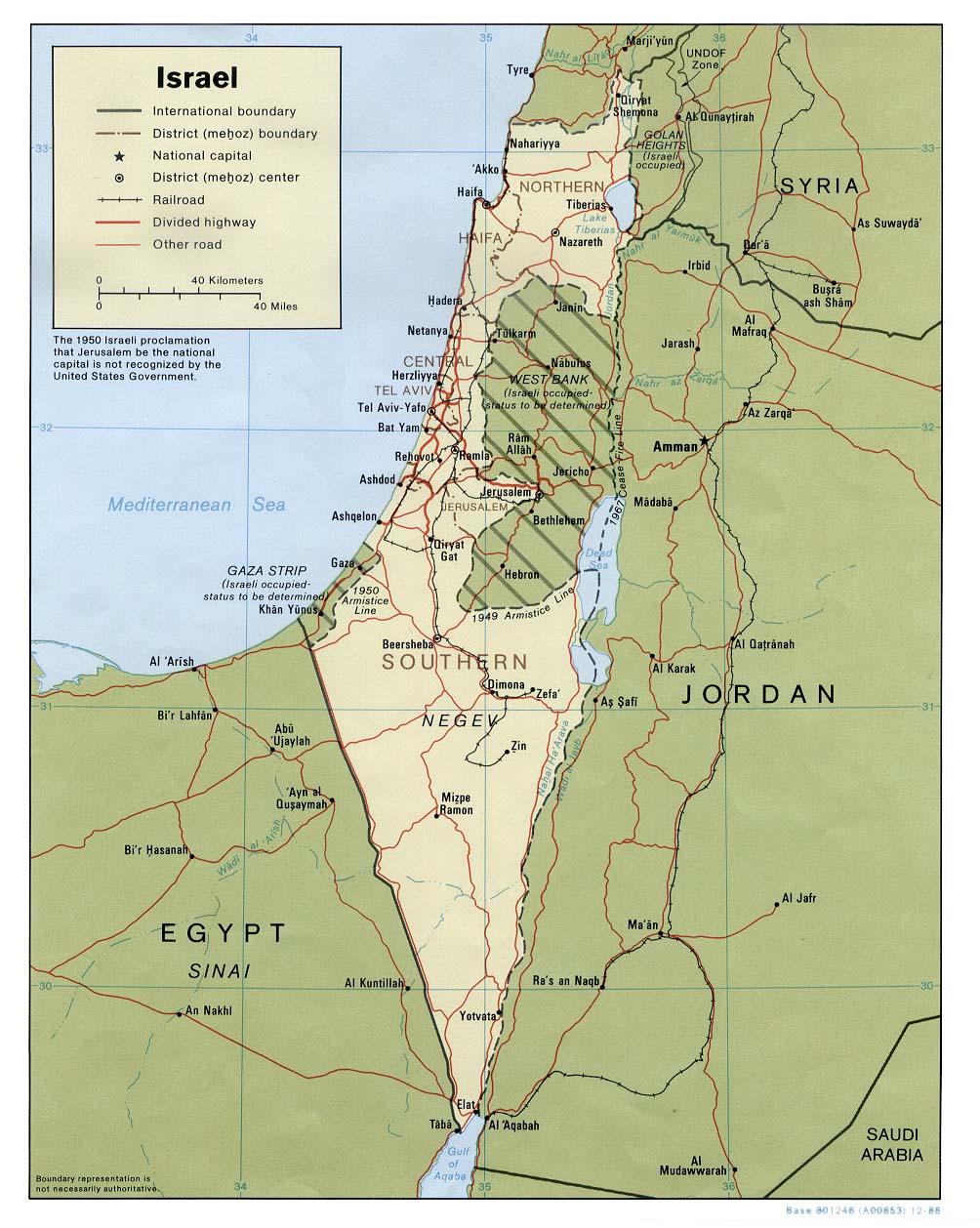
I began envisioning this trip more than a year ago, and first imagined it as a solo journey. I pulled out a map, and noticed that Bethlehem is a straight line south from Nazareth, about 90 km. Looked easy enough.

Detecting a slight concern for my safety and security in this troubled part of the world, my wife asked if there was some sort of tour that I could join. I appreciated her point, but being herded on and off a tour bus was not the experience I was looking for.

I wanted to find out what the “situation” was like from people who lived in the region, not through the lens of the media, which often fixates on isolated events, giving one a sensationalist and distorted view of what life on the ground was really like. I began contacting random people through the social networking site facebook, explaining my idea and asking if it was indeed possible to walk from Nazareth to Bethlehem.

The first response I received said I couldn’t do it. I felt a little deflated, but I wasn’t about to let that get me down, so I asked for some clarification. There’s a big difference between can’t do something and CAN’T do something. The person sent another message saying that it could be done (now that’s more like it), but when I got to the Palestinian territory of the West Bank, of which much of the Nativity Trail travels, the Israeli Defense Force may not allow me to enter and if they did, they wouldn't be responsible for my safety.

After a few more contacts, I was put in touch with someone named George, whose runs a small group that among other things organizes walking tours from Nazareth to Bethlehem. By this time, and much to the delight of my wife I’m sure; I had warmed to the idea of a small (emphasis on the small) group tour. Early last year, I remember coming home one day and my wife said someone named George from Bethlehem left a message on the answering machine. I found this amusing because I had only associated Bethlehem with one name, and it began with a "J". After chatting with George from Bethlehem for a bit, I figured this would be the best way to fulfill my desire to visit Israel and Palestine.

The group will spend the first couple of days in Nazareth, and the northern part of the West Bank, before beginning the 130 km, nine day walk to Bethlehem. We will overnight in Zababdeh (where interestingly, by law the mayor must be Christian), Fara’a, Nablus, Duma, Alauja, Jericho, and Mar Saba, and finally Bethlehem. I will then end my journey in Jerusalem on Easter weekend.


Click here for a larger view of the map:

As if only the devout could appreciate religious history, I’m often asked why a nonbeliever like myself would be interested in visiting the Holy Land. A fair question, I suppose.

I was baptized in the Anglican Church, and as a youngster went to Sunday school. It was there I would listen to idyllic stories and daydream about this far away land. Once I was even in a Nativity play. Though I don’t remember, I think it was a bit part – a shepherd, maybe. Or was it a donkey, or maybe a tree?

As I grew older my beliefs began to take shape. I never thought of, or referred to myself as an atheist. I have a good friend, who on occasion will say, “but that’s what you are…that’s what you are.” Maybe so, but I'm just a guy that believes certain things and have never needed a label to satisfy those beliefs. Despite my thinking, and the fact that Churches, and other places of worship, often make me feel uncomfortable, I have an appreciation for religious history and the intoxicating lure that has drawn pilgrims (and conquerors) to the Holy Land for thousands of years.

After more than a year of planning and reading countless books, the Unlikely Pilgrim sets off for Tel Aviv tomorrow.

Wednesday, March 10, 2010

A writer's life in Hawaii

When I told people that I was going to Hawaii to write some magazine articles, the usual reaction was one of envy. My English friend (who talks with a funny accent) would probably say something like...you jammy sod, while others would use much stronger and more direct language. Words that I can’t repeat, because my mother might read this. The point being—who wouldn’t want to jet off to Hawaii to do some writing?

While I’m not looking for any pity, especially given the fantastic view I have of the beach from my room at the Marriott’s Waikiki Beach Resort and Spa, let me give you an idea of what life is really like in Hawaii for this intrepid writer.

A year or two ago, Asia Pacific Airlines, a cargo airline that operates out of Honolulu approached the magazine about covering their operations. The editor passed it on to me and said to look into it if I ever found myself in the area. I don’t often need an excuse to come to Hawaii, though the timing never worked on my previous visits here, but since I was here again reporting on Hawaiian Airlines, I could probably make some time. And so I found myself on the phone yesterday talking to Jimmy Sy, the airline’s Honolulu station manager.

“Ok, the flight is coming in at 0430 (yes, that’s four-thirty in the morning),so you’ll need to be at the airport by 0400, and you have to call me in the morning, so I can let you know if the plane will be arriving on time.”

“Right (insert pause)...four in the morning. No problem...I’ll be there, and I’ll call in the morning.”

I got off the phone with Jimmy, and began to ponder what part of the morning I would be calling him if I needed to be there at four. Better not to think about it.

Since I had set the alarm for 3:00 am, I decided to go to bed relatively early, though the drifting sound of ukuleles from the hotel next door made sleeping a bit of a challenge. I looked at the clock at 1:00 am and thought this would be a good time to call Jimmy. But he didn’t answer his phone. So, I went back to bed and when I woke at three, and called him again. Yes, the plane was on schedule.

After showering and getting dressed, I grabbed my bag and went to the hotel lobby to try and find a cab. I only saw one couple, and wondered if they were coming in from a night on the town. The city looked deserted as we drove to the airport. The smart people were all still sleeping.

Jimmy arrived at the same time I did, so he led me to his modest office, where he fired up his computer, and checked his emails while I asked him some questions.

The flight we were meeting originated in Guam 10 hours earlier, and made a stop at Majuro en route to pick up 45,000 lbs of fresh tuna.

Never heard of Majuro? Well, it has a population of 25,000 and is the capital of the Marshall Islands. You’ll find this speck of land in the middle of the Pacific at 74’N 171⁰16’E (check it out on Google Earth). It’s so narrow that the width of the Island can only accommodate a two lane road. Oh, and given the load on the flight, there must be a lot of tuna around.

Just after 4:00 am, Jimmy stepped out of his office. That’s when the pilots of the plane radioed in.

“Honolulu...”

I could hear coming from the radio in that crackly, far away sound. A minute passed and another call came in.

“Honolulu Ops...?”

I wanted to go over to the radio and tell them to circle the airport for a few hours, so we could go get some more sleep. When Jimmy came back I told him that someone was trying to call.

He got on the radio and the pilots confirmed that they would be arriving at 0428. Jimmy confirmed that 1-Charlie was the parking stand.

Jimmy gave me a security badge and a bright reflective vest to wear, and we drove over to the cargo area of the airport. Not long after we arrived, the airplane could be seen touching down. A short taxi brought the Boeing 727 freighter to the stand, and once the stairs had been pushed against the aircraft, the door opened and the three pilots didn’t waste much time getting off. Presumably to go to a hotel for some sleep. With equal haste, the large side cargo door was opened exposing the interior of the jet. Snugly packed in the aft fuselage were seven pallets of fresh tuna. It only took 20 minutes for the aircraft to be unloaded. Inside the warehouse, the boxes of whole tuna were being separated and sent to their final destination in Honolulu, Los Angeles, and New York.

After thanking Jimmy for his time, I took a taxi back to my hotel and climbed back into bed just before 6:00 am. A quick nap before I needed to be at a meeting two hours later.

There you have it. A taste of what life is like for this writer in Hawaii. So, the next time you bite into that piece of tuna sashimi or tuna sandwich, think of me standing in the dark at the airport in Honolulu, at four-thirty in the morning.

Monday, March 8, 2010

Hawaii...you gotta be here

I have a friend who says Hawaii is overrated. Is it possible for someone to rate something they have never experienced? I’m not so sure, but I think I get his point. Because Hawaii is a little over five hours flying time from the west coast of the U.S. and Canada, it’s accessible. And given the curious love affair that the Japanese have for Hawaii, the place can feel a little, well overrun by holiday makers. Well actually it’s only Honolulu that is a zoo, with its traffic and jungle of high rise hotels, and shops, and packs of tourist touts wanting to sell tours, jeep rentals, and the opportunity to shoot a real gun indoors. Why anyone would come to Hawaii and want to shoot a gun is beyond me, but presumably there is a market.

But this is what amazes me about Honolulu. Out in the middle of the Pacific Ocean (okay, not exactly the middle, but you get the drift) is this vibrant, dynamic city of close to a million people that pulses with energy. The closest city of any note is San Francisco, and it’s 2,400 miles away.

Like my wayward friend, I didn’t have much interest in visiting Hawaii, and even after my first visit 12 years ago, I wasn’t totally sold. Then I was introduced to Maui, the quieter side of Hawaii. And I love it. I blame my wife. She’s knows Hawaii like Don Ho knows ukuleles She was one of those spoiled (I mean that in the kindest, most envious way, of course) kids that always went to Hawaii. Yes, yes, I know that my five year old son has been to Maui twice. Please remind me to be less indulgent.

Crossing the vast ocean, you begin to wonder if it’s all a rouse. While the sea has turned a delightful blue colour, there is nothing but, well, water. Though the wisps of cloud below look like sweet pieces of cotton candy pulled from its paper stick. Then the islands—Maui, and Hawaii, and Molokai, and Oahu sneak up on you, and as you land in Honolulu you pass the famed Waikiki beach, with Diamond Head, a 760 foot volcanic crater rising majestically at the end of the beach. And when you step off the airplane, there is something seductive about breathing this lovely tropical air, and watching people flock to the beach in the evening to watch the sun melt into the sea, or see the surfers trying to catch one last wave before dark.

You gotta be here...my friend doesn’t know what he’s missing.

Saturday, March 6, 2010

Missing Sunday

Some people don't like Mondays. For my five-year old son it's Wednesdays and Sundays that he doesn't much like. What could be so horrible about those two days? They're hair wash days, and washing his hair is like a trip to the dentist for some.

He's flying to Australia this evening, and if I didn't know better, I'd think that it was he who chose the day to leave, because through the magic of time travel, he will miss Sunday all together. How is that, you wonder? Well, he leaves Vancouver late on Saturday evening, and will land in Australia on Monday morning. In effect, Sunday, March 7th will not exist for him (or his brother, mother, and grandmother, who are all travelling with him). And if Sunday doesn't exist then he misses a hair wash day. Smart kid. Good planning.

Another interesting quirk of nature is that in the next month he will experience all four seasons (though not in normal sequence) -- winter, summer, autumn, and spring. Figure that out.

Sunday, February 14, 2010

Some technology I can live without

Late last year I came across a website that noted 21 things that had become obsolete during the past decade. A bit of a misnomer, because most of things profiled aren’t obsolete. Anyway, because of the proliferation of GPS units in automobiles, maps, according to this website, are apparently obsolete. A shame really because I really like maps, and considering the number of times my five year old son has looked at his dog-eared and crumpled Disneyland map, he likes them too.

I’ll admit to being a reluctant user of new technologies. I was the last person to get an ATM card, the second last person to get a DVD player (my parents were the last), and I’m able to resist the urge to buy the latest electronic gadgets.

Last week when renting a car in Los Angeles, I asked the guy for a map. “Oh, I forgot to ask if you wanted a GPS.” No, just a map, I replied. It’s all I would need.

With words like, “Oh, you HAVE to get one of those" -- others have extolled the virtues of these little devices, but I’m not sold. They seem more of a novelty to me. Plan your route in advance, know how to read a map, and follow the signs. And if you do get lost, delight in the detour.

I’m not sure if it’s just my family, but has anyone else ever gotten lost when using a GPS? Last year while in San Diego, I told my sister (whose car was equipped with a GPS) to take a particular road along the beach for a nice drive. She was following me for a while, and then turned off. When I asked why she turned off, she said the GPS told her she was seven miles from Mexico, and she thought she was lost. How ironic the person with the GPS thought she was lost. Indeed my sister probably was seven miles from the Mexican border. While my sister was afraid of Mexican banditos or something else, my wife and I enjoyed a pleasant seaside drive.

The other day I was driving with my parents, again in San Diego, and they had programmed the GPS to take my son and me to Sea World. It’s an easy 4km from where we were staying. From the front of the vehicle all I heard was an annoying woman’s voice (no, not my mother’s) coming from the computerized unit sitting on the dash.

"Turn right 250 metres, bear left 200 metres, turn right, turn right, turn left, go straight, recalculating, recalculating."

Instead of just following the well-marked signs to Sea World, my parents were so focused on the GPS unit. In fact, when we left we actually missed a turnoff, because they were listening to the directions. I asked my mother if she could turn the annoying voice off. I have no idea how anyone could concentrate on driving when this nagging voice is telling you where to go. It’s worse than the worst backseat driver. I would have thrown the device out the window before getting past the first block.

Where’s the joy in not always taking the most direct route? Or the unexpected pleasures that invariably come with getting lost? Technology has indeed made our lives better, but there are some things that I can do without. Does anyone have a map?

Sunday, January 24, 2010

Going gray

So, the other day I noticed a gray hair in my amazon-like forest of chest hair. Isn't it a bit early. I mean I'm not quite 40 yet. Then my wife kindly told me I had another three, or four, or five...I told her to stop counting...on my back.

"You know, if it was all gray, it wouldn't look like you have any hair on your body!"

Great, the kind of support one can count on from one's spouse. Do they sell gray dye at the 24 hour pharmacy? Probably not.

This got me wondering, why does our hair turn gray? My parents used to blame it on the stress I caused them as a child. Apparently, that's a load of bunk. Here's the follicle on my unscientific research.

Hair follicles contain pigment cells, which in turn produce a chemical called melanin. This gives the growing shaft its colour. When the pigment cells die, the hair turns gray. I did learn that it may take more than 10 years for all the hair to turn gray.

One other fact. The average scalp has 100,000 to 150,000 hairs on it. And for those of you who know me, I'm not all that average.

Yes, there was a time when my head didn't look like a clear cut:


15 years later


Friday, January 22, 2010

West Coast Air

My article on West Coast Air is being published in the March issue of Airways magazine. Included in this article is a report on a fantastic flight from Victoria to Whistler. You can view the article by using the zoom (+) button, and the scroll bars, or you have an option of downloading the article.

Enjoy,


A169_WestCoastAir2

Thursday, January 7, 2010

The great places the news will never tell you about

If it weren’t for an episode of Friends, many people would never have heard of Yemen. As it is, most know little of this Middle Eastern country, or could even locate it on a map. Yemen, with a history that spans thousands of years sits on the southern side of the Arabian Peninsula. Saudi Arabia borders the country to the north.

Apparently, the ancient Romans called the area Arabia Felix, Happy Arabia. But there is little to be happy about in Yemen these days. It is the poorest country in the Arab world; burdened by an unemployment rate of 40% (183rd in the world), and oil reserves that are expected to be depleted in 2017. And while the government has attempted to improve economic conditions and reduce illiteracy, Yemen has come in the news recently for largely negative reasons. The government has been fighting a civil war with religious rebels, and parts of the country are purported to support terrorist training camps.

I mention Yemen because despite the negative attention that the country has received, there are some historical treasures that are worthy of knowing about. In fact, a few years back I was interested in writing about Yemenia, the county’s national airline, but the folks there were inept; hence I was unable to arrange a visit (this ineptitude is not exclusive to Yemenia, similar useless public relations people can also be found at AVIANCA, Aer Lingus, TransAero, and a host of other airlines, I digress).

We often see a country through the lens of a television camera, or the tip of a pen (do writers still write?), and usually what we see is the negative, so if you have actually heard about Yemen in the news recently, they probably didn't show you the old walled city of Shibam. Dating to the 16th Century, the city is known as the Manhattan of the Desert, because of its ancient mud brick skyscrapers. Below are a few photos of Shibam and Sana'a, courtesy of http://www.traveladventures.com/


The news probably didn't share with you the old city of Sana’a, where 103 mosques, 14 traditional bath houses and more than 6,000 houses dating back a thousand years still stand.

Sometimes we need to get beyond the trouble and negative stories to see the jewels that exist in this world.


Tuesday, January 5, 2010

Bigger is not always better (unless we're talking about buildings)


I usually eschew the bigger is better notion (I’m not sure what they are compensating for, but the drivers of Hummers and Escalades, and their ostentatious ilk, aren’t cool), except when it comes to buildings, and then BIGGER IS BETTER. The granddaddy of those buildings, the Burj Dubai, or Burj Khalifa as it is now named, was officially opened yesterday. Almost two years ago, I had the pleasure of seeing the Burj, which in Arabic means tower, while still under construction.

I arrived in Dubai in the late evening, and jumped in a taxi, glad to be shielded from the simmering heat. As the car neared my hotel, I could see this dark, monster-like building piercing the night sky. It looked foreboding and eerie. An army of construction workers, most plucked from Pakistan, India, and Bangladesh, scurried about like ants building up the colony for the Queen, or in this case, Sheik Mohammed bin Rashid Al Maktoum, the current ruler of Dubai, one of the States that make up the United Arab Emirates.

I was staying at The Palace The Old Town (though a bit of a misnomer, because there is very little that is old in Dubai), and much to my delight when I awoke in the morning, I could see the Burj Dubai, rising majestically next to the hotel. Still in its unfinished state, the Burj had already surpassed the world’s next tallest building, Taipei 101. In fact, at this time, the tower’s final height was still unknown. Wow! The World needs more buildings like this, I thought to myself.

If the marvelous design of the building doesn’t wow you, then surely the details will:

- 160 stories
- 2,625 feet (almost 1,000 feet higher than Taipei 101)
- In 2007 became the world’s tallest building
- In 2008 became the world’s tallest man-made structure

Many great cities around the world are defined by their amazing skylines. Think Chicago, New York, San Francisco, Shanghai, and Hong Kong. Even Sydney and Paris have signature buildings that have given rise to these great places. While there have been a few positive developments, I often wish the citizenry and decision makers in Vancouver were bolder when it comes to taller buildings.

For the foreseeable future nothing will surpass the Burj Dubai, but surely some bold (and ego-driven) architect is drawing up plans in their head for a taller tower.

Saturday, December 19, 2009

If you don't know me...better to just call me Mister

I don't expect a lot from the cashiers at the supermarket. I'm not fussy about how they bag the groceries, as long as they don't squish the bread (in fact fewer bags the better). I don't care that they have to look up the PLU code for parsnips, parsley, or persimmons. And I surely don't expect them to know my name. So why then do some supermarkets insist on the cashiers thanking customers by name when they don't even know them. It's torturous for the poor clerk who struggles with the proper pronunciation, and it's torturous for the person who has to listen to their name being butchered.

The other day I was at Safeway, and Gus (who had a button on his shirt that said something like, "take pity on me, I'm new) was doing a good job. The line was moving well, scanner was beeping, groceries were being bagged, money was exchanged. Everyone was happy. Then Gus remembers line 15 of the training manual that says he has to thank the customers by name. So, he stares at the loyalty card of the guy in front of me, and after a moment stammers out a name that sounds like a mix of German and Chinese. Realizing that he probably didn't get it right, Gus tries again. This time the name sounds like a cross between Hungarian and Nepalese. The customer smiled and said, "Not really, but thanks."

When I handed Gus my card, he looked at it, and realized he probably shouldn't have skipped his phonetics class. He then offered up..."Mr. Don?" Not quite, but at least he went back to scanning my groceries. Then when he returned my change and card, he just called me, "mister". Which at the end of the day is just easier. Same thing happened yesterday with another Safeway clerk. This time I was called "Mr. Dono".

No, the name is DONOHUE (which in Irish means handsome, intelligent, and charming).

To further illustrate how ridiculous this practice is, a few years ago I was at a store and the clerk looked at my Air Miles card and said, "thank you Mr. Williams." She looked blankly at me when I said, "not really!" What she didn't know, and why should she, was that the card I had was tied to my wife's account, which still had her maiden name on it.

Customers don't expect random clerks in random stores to know their names, so let's just dispense with the nonsense. Better for the customer and better for the poor clerks. A simple, thank you, is all I need.

Wednesday, November 18, 2009

NZ least corrupt nation

Transparency International, which calls itself the global civil society organization, released its annual corruption index. New Zealand (the only place my wife has been that I haven't) apparently is the least corrupt country in the world. Which is nice and all, but really how corrupt can a place be when the sheep population outnumbers humans 10:1. Yes, just over 4 million people call this island nation home, while more than 40 million sheep really run the place. As much as low corruption leads to good government, it sounds...well, rather boring.

In case you're interested, the five least corrupt nations are:

New Zealand
Denmark
Singapore
Sweden
Switzerland

Canada was tied for 8th, sharing that place with Australia and Iceland. But it's the countries at the bottom of the list that sound like exciting places to visit.

The most corrupt nation is Somalia, which isn't surprising of course to those on one of the 65 ships that have been attacked or hijacked by Somali pirates. There hasn't been a functioning government for many years. The 5 most corrupt countries are:

Somalia
Afghanistan
Myanmar
Sudan
Iraq

The most corrupt country that I have visited is Iran, which placed 168th. Again, not surprising considering this year's disputed Presidential election. We didn't experience any overt corruption during our visit, although we were detained by the police for a short while, and had to secretly remove the film from our camera and hide it in our host's sock, so that it wouldn't be found and confiscated by the police at the airport.

Honestly, and really isn't that what this is all about, the only corruption that we have knowingly engaged in was in South Korea. As foreigners working in Korea, we needed to obtain an Alien Registration Card. One day, the mysterious Mr. Park, whose job we never really knew and who just appeared from time to time, escorted Carrie and I, along with two other teachers, to the Department of Immigration. Housed in a non-descript , concrete building, we found a seat along a back wall. After a long wait we went individually to a counter to get fingerprinted and had our picture taken, so we could be registered as Aliens.

There was more waiting, and then Mr. Park led one of the other teachers to a counter, where we could see her signing some papers. She seemed stunned when she returned and told us that they asked her to sign someone else's name on some immigration documents. Mr. Park then led Carrie to the counter, where she was asked to do the same thing. We have no idea what the documents were for, or why they were asked to sign them. Sometimes it's just easier not to ask.

Tuesday, November 3, 2009

Everything in America is Big

Have you noticed that everything in the U.S. is BIG--The Big Easy, Big Sur, Battle of the Big Horn, Super Big Gulps, Big Bear Lake, Big trees that they call giants, Big Brother. It's a big country (though not the biggest), with big portions and big people, big deficit, big cars that drive on equally big freeways. Even former president Bill Clinton talked big, when he said: big things are expected of us , and nothing big ever came of being small.

It's a larger than life place, so it wasn't surprising when I heard about the very big 4,060 year sentence given to a child sex offender and recently upheld by a Texas Appeals Court (apparently Texas is a BIG state, though not the biggest). I was thinking maybe a 3,000 year sentence was reasonable, but a Texas jury was looking for something bigger. James Pope will not be eligible for parole until the year 3209. Now that's a lot of years spent in the Big House.

Sunday, November 1, 2009

Misleading Journalism

If you read Saturday's Sun from cover to cover you might have caught these two references:

South African Airways offers low airfares and good service between Seattle and a choice of destination cities in South Africa. The flight from Seattle connects through New York which makes for a nice break for such a long journey.

and

Saxena arrived Friday on Thai Airways flight 615 from Vancouver via Beijing.

And if you did catch these excerpts, from different stories, you could be forgiven for thinking that South African Airways flies to Seattle and that Thai Airways serves Vancouver. Neither is the case. Just some sloppy journalism.


South African Airways, which by the way has one of the finest liveries (that's the fancy paint on the outside of the plane) in the world, doesn't fly anywhere near Seattle. In fact, their only two North American destinations are Washington DC and New York. Instead of fine South African service between Seattle and New York, you'll get no service on an American airline, and if you choose to book through the airline's website as the article suggests you'll be forced into making an inconvenient and expensive connection between New York airports (I've done it before it's a hassle, and the cab ride will be over $100). Oh, and the fare will set you back more than $2000. But in case you're interested, I checked on Travelocity, and found a fare for the unbelievable price of $1400, all in, and no need to transfer airports. Consider it my gift to you. Just send me a postcard.


Now on to the second misleading article. Presumably long time fugitive, Rakesh Saxena, who was extradited last week to Thailand after 13 years of playing the Canadian judicial system did indeed arrive on Thai Airways flight 615, but that flight originates in Beijing. Thai Airways has never served Vancouver. It is likely Saxena and his entourage of Thai police officers flew from Vancouver to Beijing on Air China.
So when you're at your next cocktail party and someone says they heard that Thai Airways flies into Vancouver, you'll know they don't. Don't believe everything you read in the paper.
By the way, if you were interested in purchasing a ticket on that South African Airways flight to Jo'burg, my legal name in my passport is KENNETH.

Thursday, October 29, 2009

What exactly is the Prince's job?


Next week, Prince Charles (known by close friends as Chuck) will be coming to Canada, and if a poll of 1,400 Canadians is a reflection of the country, then indifference will probably mark his 15th visit to Canada.

Out in the colonies, the British royalty are kind of like those distant relatives, who come to visit every once in while. They’re pleasant visits, but not really full of much substance. So, it doesn’t surprise me when I read that half of those polled no longer believe there should be a Queen or King as a Head of State, and that only one in five would make an effort to see the Prince of Wales if he were nearby.

What does surprise me about the poll is that almost 700 people thought that Chuck was doing a good job, while just 34% thought he was doing a poor, or extremely poor job. And 62% said the Queen was doing a fair, good, or excellent job.

Really? And what are there jobs? It’s not like the days of old when Kings and Queens led countries, oppressed their subjects, invaded foreign lands, and ruled distant empires. Even Chuck’s website is a little vague about what he does. Under the Work section it reads:

The Prince of Wales, as Heir to the Throne, seeks, with the support of his wife, to do all he can to use his unique position to make a difference for the better in the United Kingdom and internationally.


Yah nice, but aren’t many of us trying to make a difference for our respective countries and the world?

I was chatting about the state of British throne just the other day with my colleague, who apparently claims to be Canadian, but spent of her impressionable years growing up in London, so she talks a funny kind of English. She told me that the Windsors (sounds like it could be the name of a soap opera) took a much greater interest in British affairs than we hear about in the backwaters of the Empire. Maybe so, but it seems that the Royals of old had a much greater impact on the affairs of their countries. Take for instance William, the bastard, a French dude, who by the time he was 19 was dealing with threats of rebellion and invasion. Later he sailed across The Channel and invaded England and proclaimed himself King. Talk about overachiever.

While I don’t often run out when Elizabeth or her sons come to town (though in school once we stood on the side of the street waving a little Union Jack while Liz and Phil drove by, and I did bid farewell to the Royal clan when they boarded their Yacht), I am a sucker for pomp and pageantry, and I don’t mean to sell Chuck short, because he engages in many charitable causes and speaks out about environmental degradation, but it just seems that these Royal visits are merely tightly controlled glad-handing events.


His website says that he and Camilla hope to meet a cross-section of Canadians during their 11-day visit. If his handlers would let the guy loose, I’m sure he would have a more meaningful dialogue with Canadians, but he won’t get much of a sense of Canada being hustled from one heavily scripted event to another. Not like his younger brother, Edward, who while staying in Victoria at the 1994 Commonwealth Games, apparently donned a ball cap and slipped out the side door at Government House without his security detail and walked downtown to take in the nightly concerts in the Inner Harbour.
I wish the Prince and his Princess a pleasant visit, but like most Canadians I won't be rushing out to see them.

Monday, October 19, 2009

A long road trip

So I learned today that it may soon be possible to travel to Mars in 39 days. This thanks to a new Ion propulsion engine. Not sure what that really means, but it sounds fast.

Apparently Mars and Earth only pass close together every two years, so space junkies always assumed a crew would have to travel one way, wait a year, then fly back the next time the planets were close together--raising the same kind of fear you have when your in-laws visit for Christmas and they might have to stay a year before returning home.

55 million km in 39 days--now that's one long road trip. I'm not sure it would work for our family. These days before we leave the garage, the older one is always asking, "are we there yet...are we there yet?". And when the little one starts screaming in the car, the older one starts in. Soon the back seat is a symphony of shrill shrieks.

Where would you stop for snacks along the way? Are there rest stops? "Hey honey, can you pull over, so I can use the toilet? Imagine the kind of musical play list you would have to put together.

"Haven't we heard this song before?"

"Well, not since day 17!"


My son would be playing one of his favourite songs over and over. A ditty by The Backyardigans (A grunge band from the early '90s) called, We're going to Mars.

It goes something like this:

Uniqua, Pablo and Austin:
We're going to Mars We're going to Mars A mission is what we've got

Pablo:
We're gonna say 'roger' a lot

Uniqua, Pablo and Austin:
We're going to Mars We're going to Mars We don't know what lies ahead

Pablo:
But we do know the planet's red

Uniqua, Pablo and Austin:
We're going to Mars

Austin:
What will we find when we get there

Pablo:
Probably some dude that is red there


Who knows, maybe we'll see you out there one day on the Milky Way travelling to Mars.

Wednesday, October 14, 2009

I'm no Brad Pitt, but I have three toilets

I often hear my wife talking in her sleep. The theme goes something like this. Why didn't I marry someone with the rugged good looks of Brad Pitt, or the refined charm of George Clooney, or the wit of Louis CK. Then she wakes up. And sees my adorable face.

While I'm no Pitt or Clooney, I am a great husband, but for reasons that may not at first seem obvious. I have provided my dear wife with a house that has three toilets--one on the main floor and two upstairs. I know, the pampered luxury that my wife has become accustomed to.


Now before you minimize the significance of such facilities, consider that in rural India many young women are refusing to marry unless their suitor furnishes their future home with a bathroom. This means the ladies won't be inconvenienced by having to use community toilets or squatting in fields.

In one state, close to 1.5 million toilets have been built since the No Toilet, No Bride campaign started two years ago. One woman said she won't let her daughter near a boy that doesn't have a toilet. "No loo? No, I do," she was quoted saying in a newspaper article.

The culture of favouring sons, and thus aborting female fetuses (an illegal, yet widespread practice), means there are more bachelors than eligible brides. Women and their parents are now able to be more selective when arranging a match. There's always a price to pay for screwing with nature, isn't there?

Imagine what a catch I would be in India with three toilets. I just won't tell my wife that Brad Pitt's French home has seven bathrooms, with another seven in the outbuildings on the property.

Thursday, October 8, 2009

15 cent Metro

Those who know me well know that I'm a frugal guy. Not cheap...frugal, there's a difference. If I was cheap I wouldn't have given the homeless guy some money for volunteering the directions to my hotel, during a recent visit to Seattle. It's a trait I'm sure passed down from some Scottish ancestry, and tucked deep inside my DNA. My mind is often consumed by money--how much did that taxi cost me? And that breakfast? And those two belts I bought from a street vendor yesterday in Mexico City. $20, $12, and $8, in case you were curious.

I try to live by a simple philosophy. We all have a certain amount of money, and if we are careful with it, we can experience much more than if we squander it away. That's why I shared a room with 9 others a couple of years ago, and paid $35 to stay a night in midtown Manhattan, or stayed with a family in Bucharest with no hot water for $15. But back to Mexico City.

Yesterday afternoon, I left my hotel and started walking along the impressive Paseo de la Reforma towards Zocola, the city's historical area. The de la Reforma is a multi-laned road bordered by wide boulevards, and lined with leafy trees. After passing the impressive Fountain de la Diana Cazadora and further along the Angel of the Revolution monument, I stopped in at a tourist info kiosk, and asked how long it would take to walk. 30 minutes. So I asked about the bus. The helpful attendant pointed to stop on the far side of the round about, and told me it would cost 5 pesos, 40 cents. What a bargain. Frugal guy likes that.

After spending some time ambling through the central part of the city, I thought I would take the subway back to my hotel. I scanned the colourful subway map and figured that if I walked to the Pino Suarez station, I could take the pink line to Sevilla, which would deliver me two blocks from the hotel.

I descended beneath the street and into the baking and busy maze of tunnels below, like ants burrowing through the ground. I found the ticket counter, and handed over 2 pesos, 15 cents, for a ticket. Yes, 15 cents. For a frugal guy like me, that's like pulling three sevens on a Vegas slot machine. I could ride the metro all day long at that price.

In case you need to impress someone at your next cocktail party, here's a little information on the subway. Yes, time saved looking it up online. My gift to you.

The Sistemo de Transporte Colectivo Metro, the official name of Mexico City's metro. Opened in 1969, it is the second largest metro system in North America, next to New York's, and serves more than 1.4 billion passengers a year (the Tokyo metro is the most used with more than 3 billion riders each year). There are 11 lines and more than 450 km of track. And indeed it is the cheapest metro ticket in the world.

During the initial construction, two archeological ruins were discovered, along with an Aztec idol, which apparently is different than an American Idol, and the bones of a mammoth.

The trains are long, and normally full of people, although on one train coming back from the airport this afternoon, I was able to get a seat. The windows on most cars have been scratched up by delinquents, but I never felt unsafe. Vendors ply their trade selling tic tacs, freezies, flashlights, small toys, and presumably a factory of other things. The din of the train is sometimes disturbed, pleasantly so, by the pulsing music from someone's large stereo. Music is, after all, meant to be shared.

And the one thing I noticed is that it doesn't matter where you are in the world, people entering the train don't wait to let those getting off the train, before they barge on. Humans are idiots, but I love the 15 cent metro.

Friday, October 2, 2009

We're always waiting for something


“It seems like everyone is waiting for something,” my 10-year old nephew observed recently over a family dinner. And while he was referring to the chicken, or potatoes, or salad, I thought it was an appropriate statement for life in general. Seems we’re always waiting for something.

Before we are born even, we wait to be freed from inside our mothers. And our parents, too, eagerly await our arrival. And when we do arrive, they hold their breath waiting for that shrill cry, and the thumbs up from the doctor.

As a youngster we eagerly wait for Santa Claus to come. Then on Christmas morning we wait some more until our parents get up and breakfast is made. And if you have a father like mine, you’ll wait even more, because he takes hours to open one gift.

At school, we wait outside until the bell calls us inside, where we wait until the teacher shows up, and begins the roll call (do they still do that). Students with names at the end of the alphabet always think they have to wait longer. Turns out we all wait the same amount of time. We wait for the results of our tests, while our parents wait for our report card. I always waited for my mother to ask why I don’t try harder and apply myself.

When we graduate from grade school we wait on the stage for our name to be called out, only to wait even longer until those students whose names are at the end of alphabet get called up. Then we wait for our final grades to see if we’ve applied ourselves enough to continue our education. We wait for the university to accept our application, where the waiting begins all over, except this time there are no bells to let us know when the class starts. And there is no recess.

Travelling is all about waiting, too. We go to the airport and wait to check-in, then wait again to put our bags on the conveyor belt. We wait at security and then again at the gate. Sometimes if the flight is delayed, we have to wait some more. Once onboard, we have to wait until all the passengers and cargo are loaded. Once in Dallas we had to wait until a thunderstorm passed. And when it was safe to leave we had to wait for the back up of airplanes to take off. The moment we leave, our loved ones can't wait until we return. They stand at the airport waiting for our plane to arrive.

Some mornings we lay awake waiting for the alarm to go off, and then wait for the hot water to warm up the bath or shower. We wait for the toast to jump out of the toaster, or the coffee to brew, or the Rice Krispies to go snap, crackle, pop.

Sports, too is a waiting game. We wait to enter the arena or stadium, then wait for the players to skate onto the ice, or run onto the pitch. We wait for the warm up to finish, and the puck to be dropped, or ball to be kicked. During the intermissions we wait some more--in lineups for food and drink, and for the toilet. We wait for the final buzzer to see if our team won. Then we wait to get out of the building, and wait some more to get our car out of the parking lot or to find a train home. In some cases, we wait decades before our team finally wins a championship, while others still wait for the first taste of victory.

At the supermarket we wait at the check stand for the person in front to pay for their groceries. It always seems that I’m waiting behind the person fumbling for loose change in their purse? We then wait for the cashier to scan our items, only to have to wait longer because they don’t know the code for organic spinach. We then wait for the total payment to be displayed. The cashier in turn waits for us to get find some cash or a plastic card.

The unlucky wait for the test results and then wait a doctor’s diagnosis, only to be told there is nothing more that can be done. They then wait to die. Life is cruel that way.

I’m not sure how they know this, but apparently we spend 10 weeks of our lives waiting. I guess I’ll have to wait to see if that’s true.

Saturday, September 5, 2009

Now may be the time to visit the UK...or maybe not.


If you’ve been putting off that trip to the United Kingdom or Great Britain or whatever you want to call that place where they talk that funny sort of English, now may be the time to go. As an aside have you noticed that the Kingdom, which is actually ruled by a Queen is hardly united, nor is it as great as it once was? I digress.

Instead of taking money from unsuspecting tourists and locals, 20 former pickpockets have been slipping 5 to 20 pound notes into people’s pockets or handbags for the past month in London. The “put-pocket” initiative, which is now apparently being rolled out country wide, and is being funded by Internet provider, TalkTalk. A clever marketing stunt, me thinks.

Fortunately, in all of my travels, I have never been pickpocketed. My camera was stolen at a Venice youth hostel (the miscreant didn’t even have the courtesy to leave the film behind), and someone tried to open my backpack while on a busy street in Costa Rica, but Carrie wrestled the guy to the ground and punched him in the nose.

What you may not know is that the biggest pickpocket is actually the British government. Compare the taxes and fees paid on flights to London and other European cities and you’ll see why you’re being fleeced. What's almost as bad is that most airline booking sites just display the total taxes and fees, so you have no idea who's ripping you off. But believe me, the UK government is getting a fistful of your Dollars or Euros, or Dinars.

According to the World Travel and Tourism Tax Barometer, taxes on international air passengers has risen more than 250% in London since 1994. In 1996, the UK government introduced a new international air passenger duty, which started out at 10 Pounds, but has now increased to 40 Pounds, and is set to rise again this year.

Below are the taxes and fees for flights to some European cities from Vancouver (in CAN$)

London - $457
Paris - $413
Amsterdam - $395
Frankfurt - $316

Alistair Darling, Britain's Chancellor of the Exchequer, must put his feet up each evening at 11 Downing Street, counting his dosh, because London's Heathrow is the world's busiest airport in terms of international passengers, with more than 69 million passing through each year.

Friday, August 28, 2009

Canada Line...a nice ride, lame name


The other day I rode the Canada Line, Vancouver’s newest rail link, and had lunch at the airport. The trip took less than 20 minutes, which is a vast improvement from a few months ago when I last went to the airport from my office. Then I had to take three buses and it took more than hour.

The Canada Line though seems like an odd choice of name. Is Canada the only country in the world that would think to name a rail line after itself? I can’t see the Mexicans building a subway line and calling it the Mexico Line, or the British calling the Heathrow Express the United Kingdom line. Or what about the Congo Line (isn’t that a dance or something)? Equally ridiculous would be a subway line called the Brunei Darussalum Line or the Equitorial Guinea Line, or the Peru Line.

Logically, it should be called the Olympic Line, as the city’s two other SkyTrain routes are aptly named the Expo Line, because it was built for Expo 86, and the Millennium Line, because it was supposed to open in 2000, though it was late by a year or so. But politics often trumps logic. And to have named it the Olympic Line would have invited the whiny Olympic naysayers to add the $2 billion price tag for the train line to the cost of hosting the Olympics. Safer instead to call it the Canada Line. Who would argue with that? A little lame I think.

When the initial plans for the rail link to the airport and Richmond were first proposed, I remember Burnaby mayor, Derek Corrigan, saying something stupid--suggesting that the RAV line (as it was known before we got all vain) is a waste of money, because the only people that will ride the train are airport workers and backpackers, everyone else will take a cab.

When I rode the Olympic Line to the airport, I did see a few backpackers and maybe even some airport workers, but I also saw people with luggage (and a throng of “transit tourists” like me). How presumptuous to assume that the only people that would be inclined to take the train into the city would be workers and backpackers.

And yes, it is possible to travel on the train with luggage. In fact, I once travelled from London’s Heathrow Airport on the Tube with my family and 11 bags of varying sizes. I remember it was 11, because as we got off of every train in the UK and the Netherlands, we counted the bags to make sure we had them all. In fact, I have taken the train to and from the airport in the following cities:

London
Paris
Dusseldorf
Frankfurt
Zurich
Washington DC
New York
Hong Kong
Seoul
Kuala Lumpar

Sure some people will continue to take a cab from the airport. It has some very real benefits, but most travellers want to make their travel dollars go further, and as such will opt for the train. While it’s still early to trumpet the success of the Olympic Line, some taxi drivers are complaining that they are waiting longer for fares at the airport, because fewer travelers are hailing cabs, since the route opened.

Back to the train itself. On the station platform, an automated voice announced the destination of inbound and outbound trains, and signs displayed the waiting time of the next train. Large picture windows at the front of the train offered up excellent views for passengers. And as we zoomed beneath the city streets, one young girl said it was just like riding a roller coaster. And that's my kind of roller coaster...one without the steep drops.

Name aside, when I arrived at the airport I thought to myself that with this one line Vancouver’s transit system had just grown up, and Vancouver itself had matured.

Tuesday, August 18, 2009

A stallion no more!

Like an old gelding standing in a field of green grass and wildflower, swishing the flies away with its tail, my breeding days are over. A stallion, no more.

I'm not sure what it means when your father-in-law accompanies you to get a vasectomy. I guess after knocking up his daughter twice, he'd had enough, so he dragged me to the clinic. The small waiting room was full of similarly aged men, and one woman. Perhaps a sympathetic wife. Turns out most of the guys were back for a quick follow-up check. I tried to see if they walked any differently when they left.

As Dr. Rich (an appropriate name, I suppose for a guy that has performed more than 15,000 vasectomies in the last 15 years), was looping an elastic band around my penis and clipping it to my shirt--sounds like a fraternity prank gone bad--I asked him how he got into the business of population control.

"It's a dirty business, but someone has to do it," he replied dryly.

Turns out he used to be a GP, delivery babies and the like, but I guess he delivered one too many crying baby and decided to curb that nonsense.

"The people that really need this procedure, aren't the ones that come here" he went on, "they're too busy thinking about recreation than procreation."

With the political statement aside, and penis firmly secured to my shirt, the rich doctor used his handy jet injector to penetrate (no pun intended) the scrotal skin and freeze the vas and surrounding tissue. On the ceiling above was a picture of some happy sperm swimming along with the words, sorry, boys! printed on it. At least he has a sense of humour.

After a minute or two to let the freezing take, he punctured the skin, grabbed one vas and cut it, then the other; forever severing my ability to sire any children.

"You'll smell some smoke," he said. Actually I could see it. I thought maybe he was etching his name, performed by Dr. Rich.

Then he patched up the small hole, put a few inches of gauze padding on the wound, and off I went, with my instructions to rest and a bottle of Ibuprofen.

I swear I saw the guys in the waiting room watching to see if I walked any differently.

Tuesday, August 11, 2009

It takes an American to expose our arrogance


Given all the jingoism that we often hear from Americans about theirs being the best country in the world, some might find it ironic that it takes an American to point out our arrogance. After a recent visit to British Columbia, David Rich, of Glendale Arizona, was gobsmacked (his words) by BC's slogan, The Best Place on Earth. And so should we all. What began as a slogan in some slick ads for Tourism BC, somehow morphed into the official provincial slogan. Who thought this was a good thing?

British Columbia is indeed a beautifully diverse place, but to suggest that it is the best place on earth smacks of a smugness that is unbecoming and embarrassing. A little humility is a good thing.

And what does the rest of the world think when they see that slogan? It's laughable and dismissive of other places, which in some cases are more beautiful than British Columbia. Ritch suggests that British Columbians who subscribe to this best place on earth nonsense (my word) may fall into the trap of being too insular, like some of his fellow Americans. And he says that they need to visit Pakistan's Karakoram Mountains, Nepal, Chile's Torres del Paine National Park or Iguazu Falls.

We've all come across braggarts in our lives, and they aren't always pleasant to be around. As a person, as a business, as a province, or a country, never believe that you're the best. You'll stop striving to be better, and everyone will pass you by. And by the time you notice, no one will want to play with you.

The sooner we get back to being Super. Natural British Columbia, the better

Friday, August 7, 2009

A dog by any other name

According to a UK analysis of 12,000 dog names, Max, Jack (no, we did not name our sons after dogs), Molly, and Charlie, and other human-sounding names are the most popular. Similar findings in North America echo this trend. One anthropologist suggested that it only natural that we (that’s the collective we) would give names traditionally reserved for humans, reflecting the new status that dogs, and other pets, have as family members.

Just 13 dogs in the U.S. Veterinary Pet Insurance database had the name Fido. And Rover, Patch, Spot, and Lassie were only nominally more popular. For the 6th consecutive year Max was the top name for a dog--at least by those purchasing pet insurance.

All of this doesn’t surprise me considering that Americans spend more than $40 billion each year on their pets. In the past all one needed was a bag of dog chow, a food dish, and a couple of squeaky toys. Now we've gotten a bit goofy with doggy spas, bottled water for dogs, organic food, clothing, and accessories. In some circles dogs have become status symbols. In China, dogs used to be food, but now in fashionable cities, such as a Shanghai, people carry about miniature dogs as a sign of their material wealth.

In a recent Maclean’s magazine article titled, The Case Against Kids, I found it interesting that one couple talked about their decision not to have children, yet they admitted to doting on their dog. A child still, just a different kind of animal.

Now back to dog names. A colleague and her husband named their little mutt, Perro, which may sound unique, but really it means DOG in Spanish. Now that’s original. And I know of someone else who named their dog, Puppy. It’s kind of like calling your kid, Human or Baby.

My wife did say that with a dog you can always send it to the Kennel if you want to go away on vacation. Can’t really do that with the kids, I suppose. Though maybe an idea for a business opportunity. We could call it a Kiddel.

Tuesday, August 4, 2009

Kids Say the Darndest Things

Hosted by Art Linkletter and Bill Cosby, Kids Say the Darndest Things aired on television from 1996 to 2000, and was named, because, well, sometimes kids say the darndest things.

Below are a few recent examples.

At dinner the other night, my four-year old son, Jack, said with certainty, “I want to go to Chicago!” This surprised us. Not that he would like to visit another city, but because we haven’t talked much about Chicago. New York, yes, Chicago not so much. My wife then asked, “why do you want to go there?” "Because I want to know what’s there," he said, sounding very grown up. Sounds reasonable enough, I suppose.

I have a friend who has travelled extensively through the United States, and Chicago is his favourite city. Maybe we'll get there some day.

To further illustrate how Jack has picked up his parent's love of travel, my wife asked him the other week where he wanted to go this summer. "Fiji would be nice," he replied matter-of-factly. Indeed, Fiji would be nice, but I think his mother was thinking of somewhere a little closer to home.


Yesterday Jack and I went grocery shopping while his mother and brother had a nap (lucky them). As he always does when we come to the bakery section, Jack eyed up all the decorated cakes. After examining each in detail, he pointed to one and said,"I'll have that one for my 5th birthday and that one (Sponge Bob) for my 41st birthday, and I'll have a Cars cake for my 65th birthday." Wow, nothing like being organized and doing a little pre-planning. I then started doing the math, and figured that if I'm still around, I'll be 100 years old when Jack digs into that Cars cake.


As we were driving to the grocery store, I turned a corner and then heard Jack say:

"Daddy, you didn’t do the click click."

The what?

"The click, click," he said again, his voice rising.

The what? I replied in that tone that all parents have when they have no idea what their child is trying to say.

"The lever," he said, in that tone that all children have when they can't understand why their parents don't know what they are trying to say.

Right, I forget that his mother has been teaching him about levers.

Ah, the turn signal. Right, the click click. The lever. (His mother has been teaching him about levers) Of course, I forgot to put the turn signal on. It makes so much sense now.

"Yes Daddy, you forgot to do the turn signal."

Nothing like your kids keeping you honest.

Wednesday, July 29, 2009

Losing my virginity...oh no, that's something different

Bob Barker, the former, long-time host of the game show, The Price is Right, used to end the show with a message reminding people to spay and neuter their pets. I think my wife thought he said make sure you get your husbands neutered, because I found myself on a bus this morning going to the doctor’s office for a vasectomy referral. It was ironic that on the way I was reading the Maclean’s magazine cover story, The Case Against Having Kids. Too late for me, but something others may consider, I suppose.

Dr. Rich, who apparently has gotten quite rich neutering males, will be doing the procedure. In fact, on his website he says he’s done 15,000 of them. Now that’s a lot of dicks!

On the rich doctor’s website is the bible of no scalpel vasectomies, otherwise known as The Book. Apparently, this is required reading. Who knew there would be homework?

Page one sounds promising…
A vasectomy has no direct being on sexual function. No better. No worse.

But what about just some? I mean, being married with two kids seems protection enough. Why the need for a vasectomy?

Page two gets a little more technical...
The No-needle injector delivers a fine jet of Xylocaine right through the scrotal skin onto the vas and surrounding tissue. It requires only 1/10th the volume of anesthetic compared with the needle method so there is less tissue distension (this is good, I was worried about tissue distension) and less risk of bleeding. Also it is a proven medical fact that men prefer to have needles kept as far from their scrotums as possible. (no kidding, and how many years of schooling did it take the doctor to learn this?)

The Book says that surgery and recovery are usually fast and the pain is usually minimal. Though the following is a little unsettling. The penis is encircled with an elastic band the other end of which is clipped to the bottom of your shirt. Wrong! Wrong! Wrong! One’s penis (if you have one) should never, I repeat never, be clipped to your shirt.

A few things that could go wrong, according to Dr. Rich.

Hematoma: This results from bleeding into the scrotum. It can get large and painful, and turn the scrotum black and blue. Incidence with conventional vasectomy is around 3%. The NSV literature puts it at 0.3%, but I’ve only seen 3 “big ones” in 15,000 (0.03%).

Infection: Minor infections occur in about 1 to 2% of patients. Serious infections, requiring intravenous antibiotics or drainage of an abscess occur in about 0.2% of cases. Even these rare and serious infections usually resolve completely in a few weeks.

Vasitis or Epididymitis: Inflammation and swelling of the tissue surrounding the vas or extending down around the epididymis (the part just below the vas that joins it to the testicle) occurs about 10% of the time. It’s usually mild and transient, no bigger than a grape, but rarely this can get to the size of “a third testicle”. Needless to say, this can be painful, but this too will settle with religious use of industrial strength non-steroidal anti-inflammatory drugs (NSAIDs), but it can sometimes take a few weeks to settle down. Given that swelling is what the male genitalia like to do best, all this is not surprising. In fact, inflammation and erection both produce swelling through almost identical biochemical pathways. That is why I encourage the liberal use of ibuprofen or other NSAIDs for a full week post-op, even if you're not having pain. Tylenol is usually not as effective for this.

If pain and inflammation lasts for a month, the good doctor advises to come back and see him. Like what can he do? He’s the no scalpel doc, after all. It’s not like he has the tools in his office to cut IT off should the swelling become intolerable. I think a trip to the nearest hospital would be in order.

My doctor told me they should be able to schedule the procedure in a month or two. I’ll let you know how it goes.